A drone is a tool, not a complete diagnosis
Drones help document roof shape, missing shingles, displaced flashing and areas unsafe to access. Aerial photos alone may not confirm hail mat fractures, hidden leaks, seal strength or decking condition. Separate visible observations from suspected problems, and recommend safe hands-on or attic checks when needed.
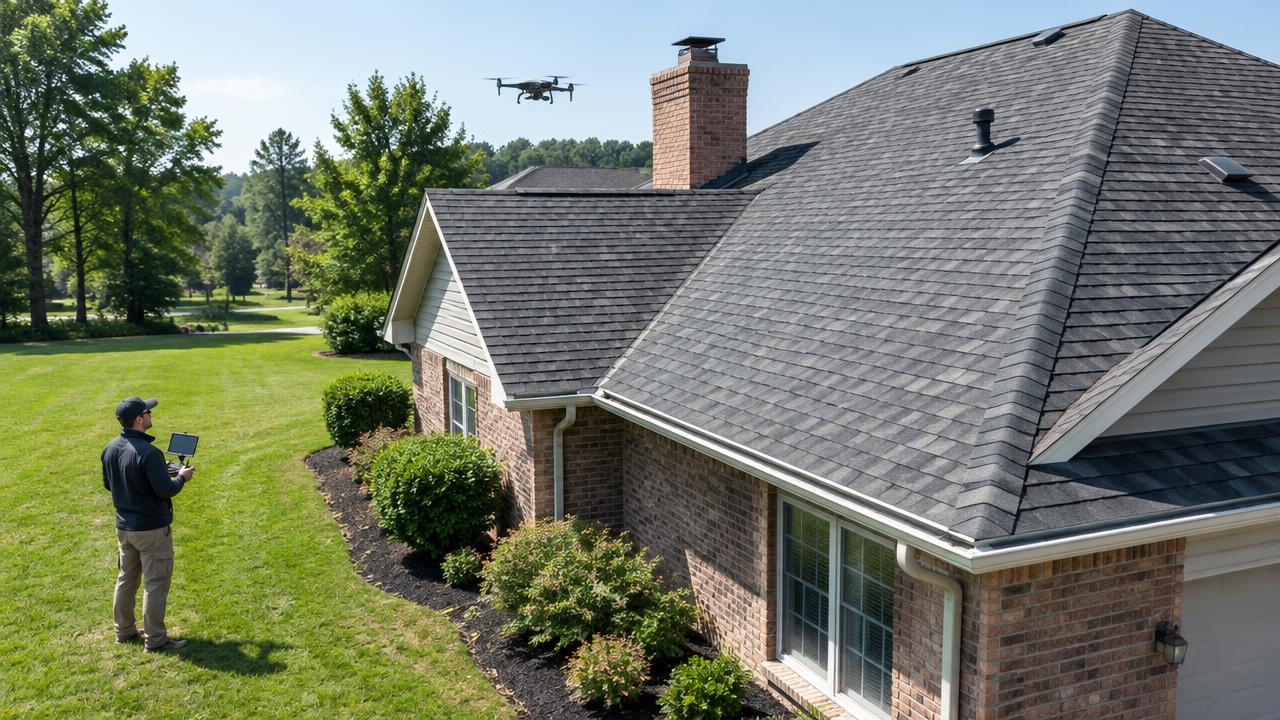
Before takeoff: U.S. commercial operations
Roof inspections performed for business generally fall under FAA Part 107 for small drones under 55 pounds. The remote pilot in command needs the appropriate Remote Pilot Certificate and current training. Certification alone does not authorize every flight: check current FAA rules and the exact site before each job.
- Aircraft and airspace
- Register the aircraft as required and comply with Remote ID unless an applicable exception applies. Obtain FAA airspace authorization where required; check temporary flight restrictions and local launch/access rules.
- Permission and privacy
- Get homeowner permission for property access, launch and the agreed inspection. This is separate from FAA airspace approval. Minimize images of neighbors and people; follow applicable privacy laws.
- Site and weather
- Check wind, gusts, rain, visibility, power lines, trees, antennas and a clear takeoff/landing area. Use aircraft operating limits and postpone unsafe flights.
- Visual line of sight
- Maintain required visual line of sight; the screen is not a substitute. A visual observer can assist. Plan roof passes that keep the aircraft visible.
- People and contingencies
- Avoid flying over uninvolved people or moving vehicles unless the specific FAA operating requirements are met. Brief any observer, plan emergency landing areas, and check battery and return-to-home settings against obstacles.
Capture a report, not just a video
Start with an overview identifying the property and all roof slopes. Then capture each slope, ridge, hips, valleys, eaves, rakes, penetrations and visible problem areas. Fly at safe stand-off distances and use camera detail rather than risky close passes. Review sharpness and coverage before leaving; label images by location and distinguish observations from conclusions.
- Useful evidence
- Include overview, context and detail images. Record inspection date, roof location and what is visible; avoid calling a dark spot ‘hail’ without supporting evidence.
- Measurements
- Use a validated measurement workflow with adequate overlap and scale/calibration. Do not estimate billable roof area from an uncalibrated screenshot.
- Explain limitations
- Customer script: ‘These pictures show the visible roof condition. They cannot tell us everything underneath the shingles. I’ll explain anything that needs a closer inspection.’
Knowledge check
Score 70% or higher to pass this module.
1. For a typical U.S. business roof-inspection flight, the pilot should follow:
2. Can a drone photo alone reliably confirm hidden hail mat fractures?
3. The homeowner grants access. Does that replace FAA airspace authorization?