What a true hail hit looks like
Hail impacts can leave localized dents or bruises and displaced granules. A bruise may feel soft because the shingle reinforcement is fractured, but granule loss alone does not prove hail damage. A surface photograph cannot confirm a hidden fracture. Use safe inspection procedures and qualified evaluation; do not press hard, lift sealed shingles or create damage while checking.
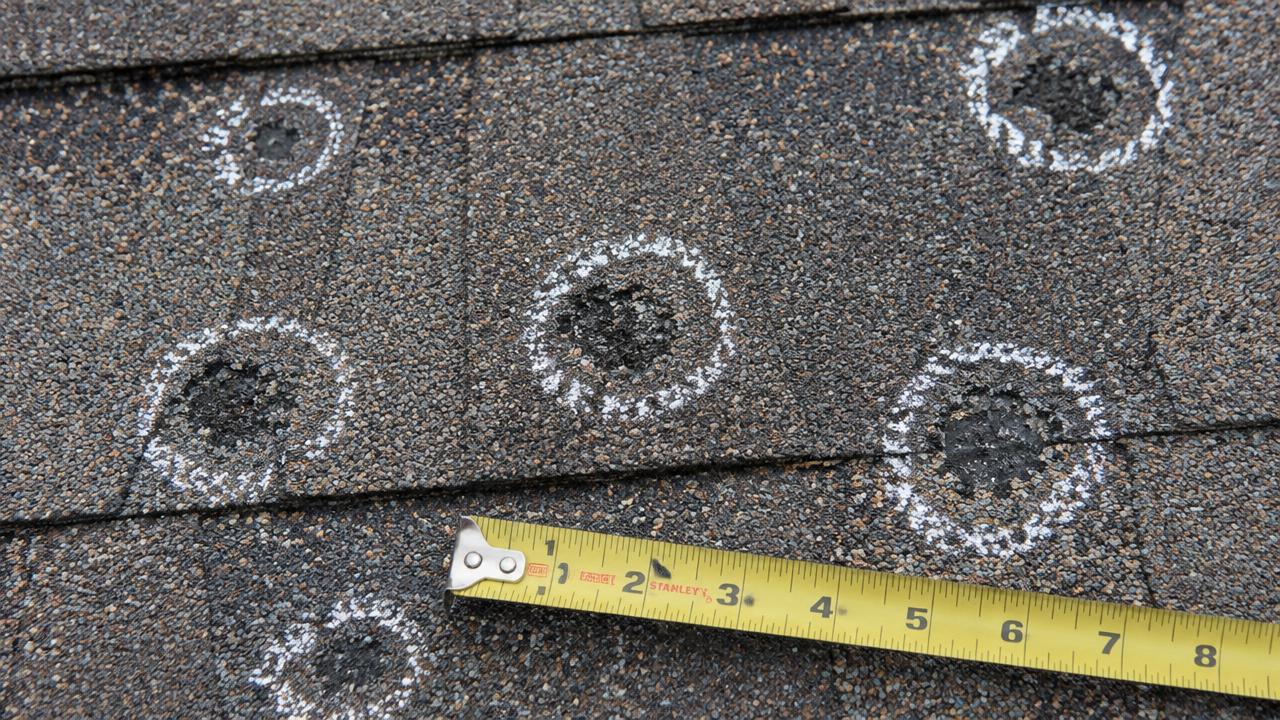
- Random pattern
- Hail is random. Damage in straight lines or only near walkways suggests foot traffic or mechanical damage.
- Granule displacement
- Dark, exposed asphalt in a circular spot, often with granules scattered in gutters and downspouts.
- Mat fracture
- The fiberglass mat cracks under impact — this is what makes damage functional.
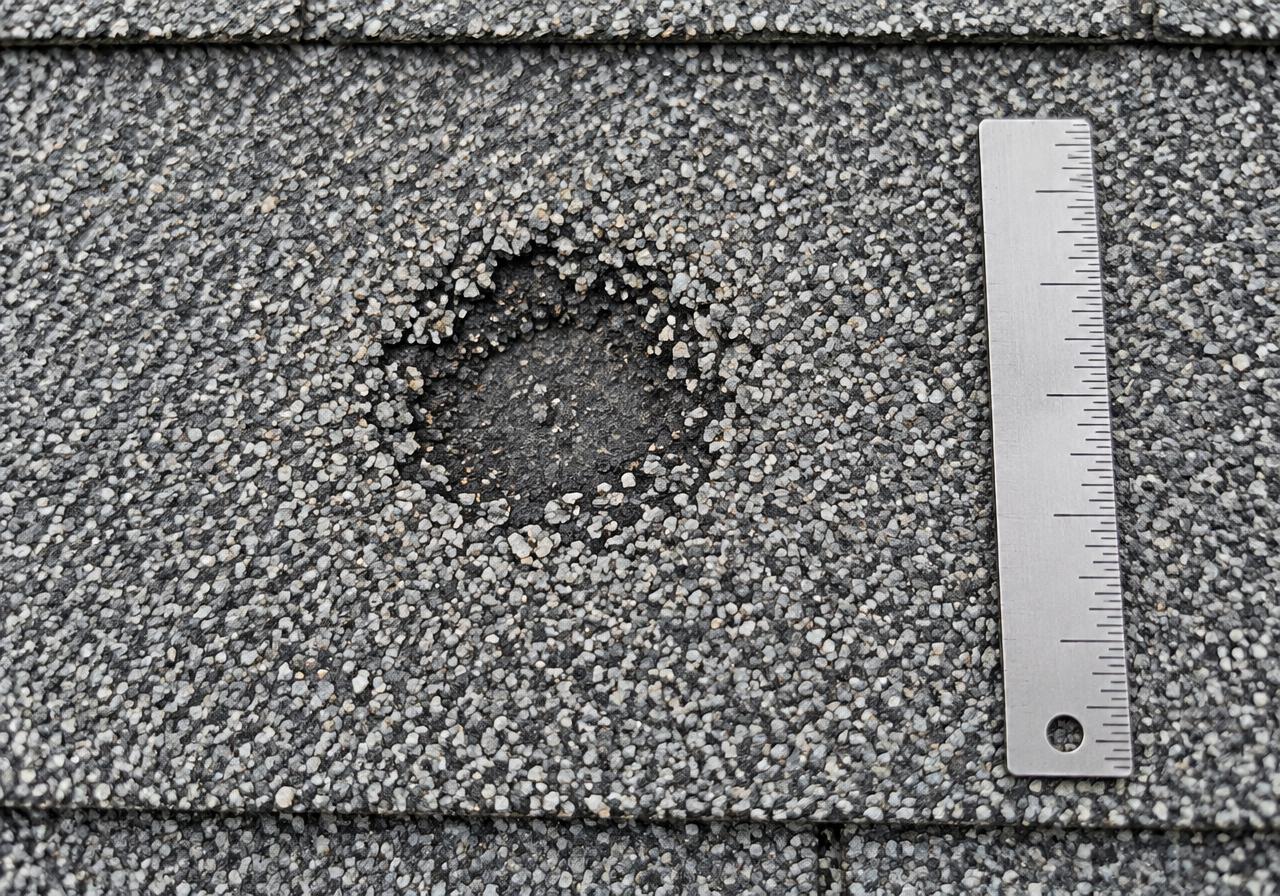
Close-up example: a possible hail impact
Notice the localized depression and displaced granules around a dark spot. These are clues to document, not a diagnosis. Compare the surrounding shingles, slope-level pattern and collateral observations, then have a qualified inspector evaluate suspected reinforcement damage. A photograph cannot establish the cause or date of a mark, hail size, or insurance coverage.
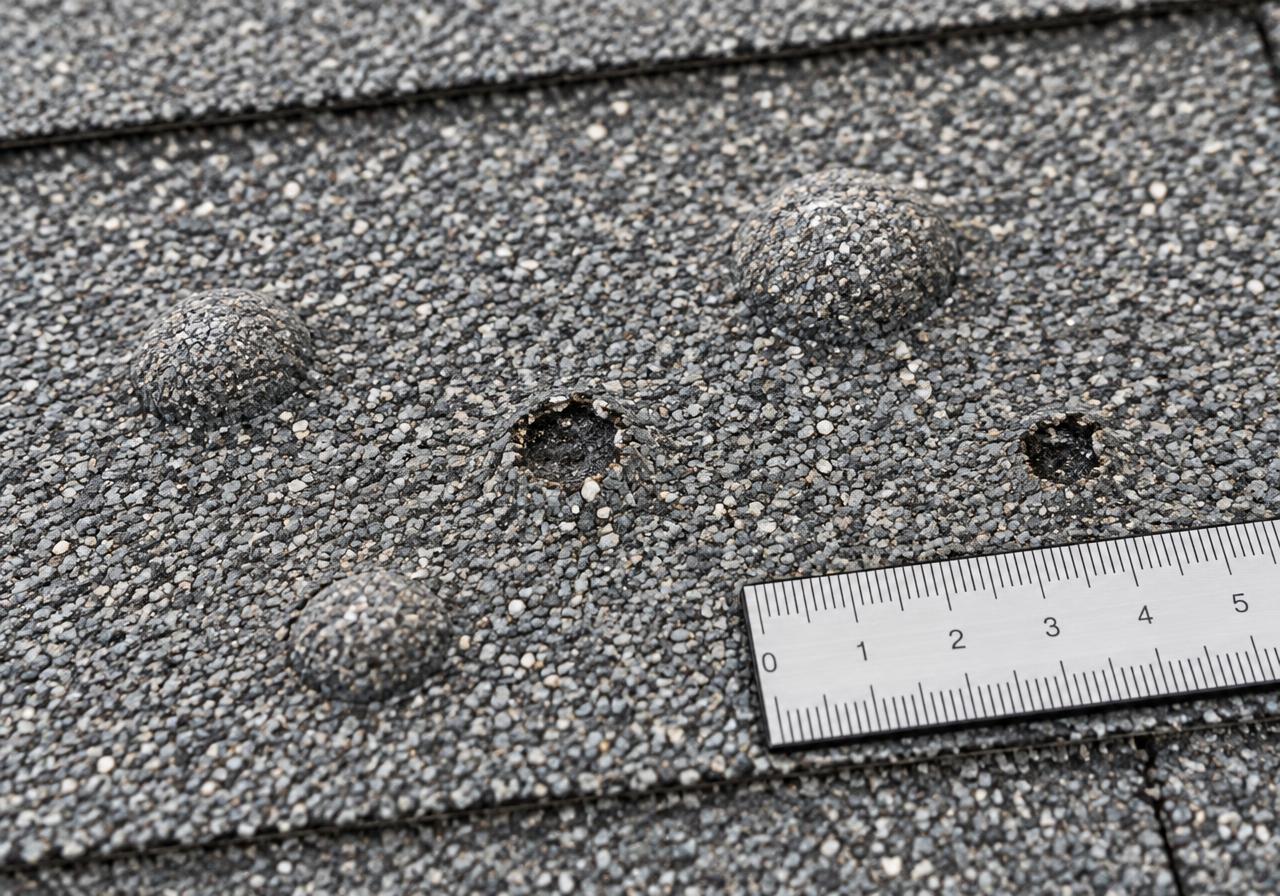
Close-up example: raised and popped blisters
Blistering can appear as small raised bubbles; a popped blister may leave a defined pit with missing granules. Compare the raised surface here with the depressed impact-like mark above. Both can expose dark asphalt, so a dark spot or round outline alone is not enough to call hail. Document what is visible rather than guessing the cause; surface appearance cannot rule out other conditions or confirm a reinforcement fracture.
Look-alikes (don't get caught)
Adjusters will challenge anything that isn't clearly hail. Know the difference.
- Blistering
- Raised bubbles may pop and leave defined pits. This is a hail look-alike; appearance alone does not establish its cause or prove a ventilation defect.
- Granule wear
- Uniform aging loss, heaviest at drip paths. Not storm damage.
- Mechanical / tool marks
- Crescent or linear marks, scuffs from foot traffic.
- Algae / staining
- Dark streaks, not bruises.
Collateral damage and the test square
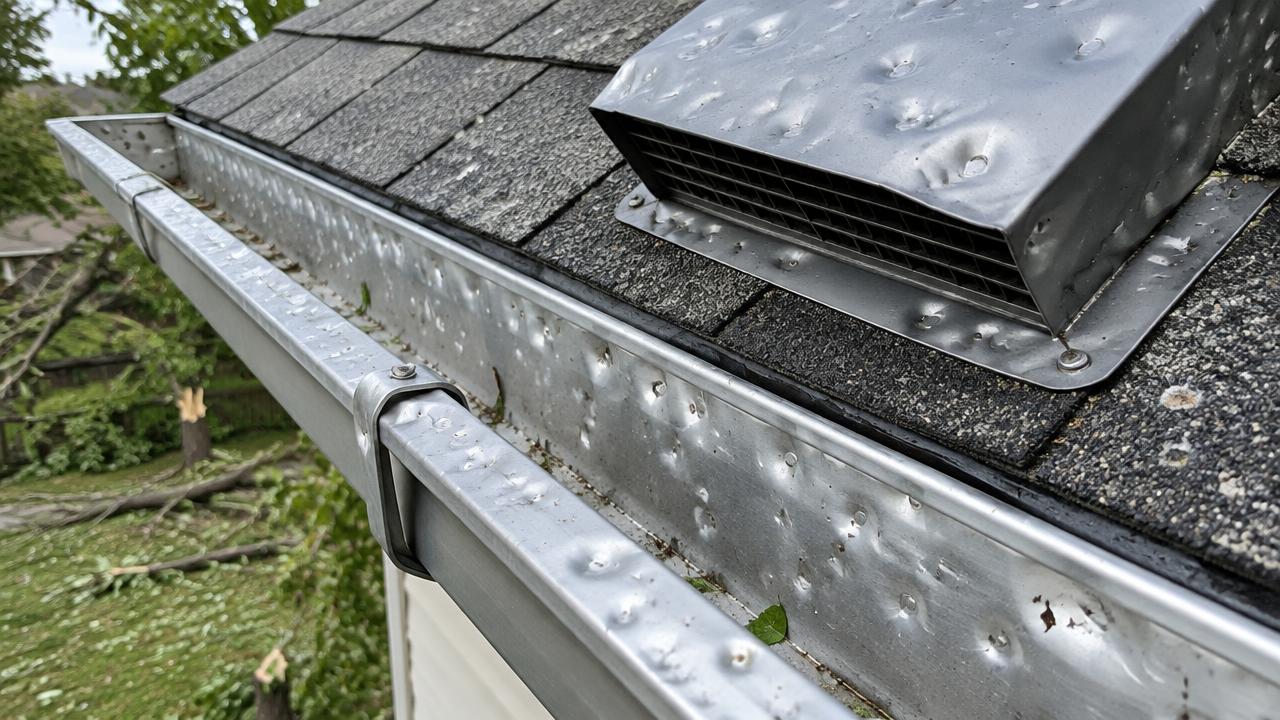
Start on the ground: document dents on gutters, downspouts, AC fins, window wraps and soft metals. These can support evidence of a hail event but do not by themselves establish hail size, timing or functional roof damage. If safely accessible, document a representative 10x10 ft test square on each slope, following the applicable inspection protocol. Record suspected impacts and photograph an overview, the square and close-ups with a scale reference. There is no universal hit count that guarantees replacement or coverage.
Knowledge check
Score 70% or higher to pass this module.
1. A hail bruise with fractured reinforcement may feel:
2. Raised bubbles with small popped pits suggest which hail look-alike?
3. A standard test square is: