From one roof to a lasting customer relationship
A roof sale should not be the last time a homeowner hears from you. Harborshield 360 gives roofers a reason to offer every client an ongoing connection: when a future storm affects the homeowner, they already know who to turn to. The business value is continuity—keeping the customer relationship alive instead of starting from zero after every storm.
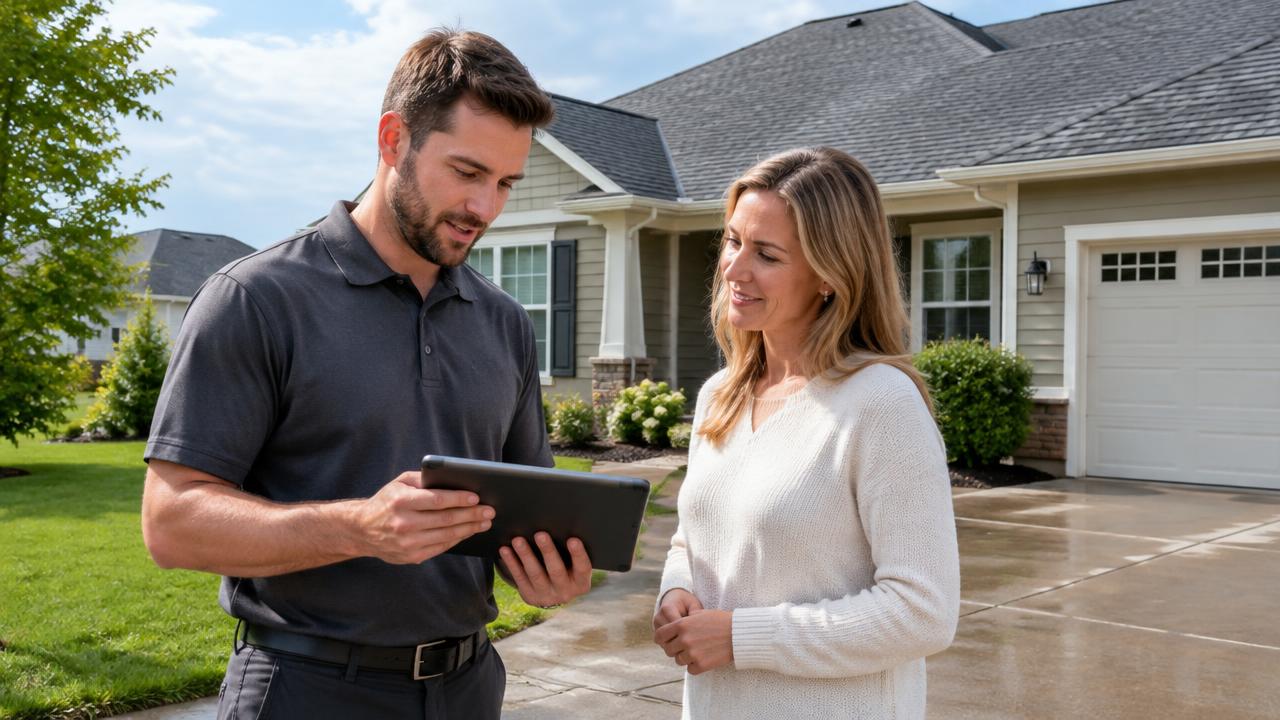
- For the homeowner
- A familiar roofing contact who knows their prior work and can explain the next step when a concern arises. Present the connection as service, not a promise that no damage will occur.
- For the roofer
- A customer base you continue serving, rather than a list of old invoices. Stay recognizable through useful, permission-based follow-up.
- Part of a wider network
- Earlier Harbor Shield planning includes homeowner choice of service providers and keeping vendor contacts available. StormBuddy is the storm-related part of that wider relationship; do not represent that as an exclusive contract with your roofing company.
Offer Harborshield 360 during every client visit
Introduce it at the inspection, sales conversation or final walkthrough—even when the customer does not need a replacement today. Offer it to every client, but let each homeowner choose whether to participate. Use your company's current, verified enrollment process and terms; this lesson does not establish a price, free subscription, activation method or automatic monitoring capability.
- Explain the value plainly
- Practice script: ‘We can help you get connected through Harborshield 360 so you have a familiar roofing contact if another storm comes through. Would you like me to explain how it works and what information is shared?’
- Confirm the actual offer
- Before enrollment, verify eligibility, any cost, duration, available features and how the roofing connection works. Show the homeowner the current terms rather than guessing.
- Agree on permission
- Explain what property and contact information is needed, who can see it and why. Record permission for the approved connection and separately for follow-up communication. Monitoring the property for storm exposure is not tracking the person's movements.
- Complete the handoff
- Use the approved process, confirm the homeowner can find your company's contact and understands how to ask for service, and record the agreed next step in your approved customer system. An invitation is not proof of successful enrollment.
Turn a storm into a service conversation—not a damage claim
When a verified storm affects the customer's area, the existing connection gives you a relevant reason to check in. Use only storm information and notifications actually available through your approved tools. Never promise that Harborshield 360 detects every storm, diagnoses roof damage, automatically contacts you or guarantees insurance payment unless the specific capability has been verified—and no notification alone proves damage.
- Check before you contact
- Confirm the event, property location, communication permission and prior roof notes. Avoid blanket ‘your roof is damaged’ messages.
- Lead with their welfare
- Practice script: ‘A storm was reported in your area. Are you safe, and have you noticed leaks or loose shingles? A storm report does not mean your roof has damage. If you would like, we can arrange an inspection and review the photos together.’
- Triage real concerns
- For active leaks, explain safe immediate steps and arrange appropriate service; never ask the homeowner to climb a roof. For immediate danger, direct them to emergency services. Do not promise an emergency response time your company cannot meet.
- Close the loop
- Confirm the appointment, inspect safely, share findings and limitations, and explain repair options and any applicable warranty terms. A sound roof is a valid outcome; do not manufacture a replacement opportunity.
Keep your customer base between storms
Retention comes from consistent service, not constant sales messages. Build an agreed follow-up routine around the homeowner's actual needs: completion documents, warranty contacts, unresolved concerns and useful seasonal roof-care reminders. Harborshield 360 supports the relationship; your team's reliability earns the next call.
- Preserve useful context
- Keep installation and inspection dates, relevant roof records and service history in the approved system with the homeowner's permission. Do not assume these records automatically sync to Harborshield 360.
- Be easy to reach
- Make sure the homeowner has a current company contact, knows whom to call for warranty questions and receives the updates you agreed to provide.
- Respect their choice
- Honor opt-outs and changes in preferred contact method. A homeowner remains free to choose another provider; the connection is not ownership of the customer.
Create more prospects through an existing relationship
A satisfied, connected customer can introduce you to neighbors, family, realtors and other property owners. Offer value first, then ask for a voluntary introduction. The referral prospect needs their own permission-based conversation and their own roof inspection—your customer's storm history is not evidence of damage to someone else's property.
- Ask after service
- Practice script: ‘If someone you know needs a roofing contact or wants to hear about Harborshield 360, would you be comfortable sharing our information? They can reach out when they are ready.’
- Let the homeowner introduce you
- Do not take a neighbor's phone number as permission to market to them. Ask for a welcome introduction or have the prospect contact you. Never share customer records or storm details without permission.
- Support referral partners
- Explain to realtors, insurance agents and property managers how your team stays available after the initial job. Do not imply an insurer endorses you, promise claim approval or invent referral incentives.
- Measure the relationship
- Track offers made, confirmed connections, permitted storm follow-ups, appointments held, repeat-service requests and qualified referrals in your approved system. Review satisfaction and opt-outs too—not just sales totals.
Practice: the connection after the sale
Role-play three moments: offer Harborshield 360 at a final walkthrough; check in after a verified storm without claiming damage; ask a satisfied customer for an introduction. Explain the confirmed offer and privacy choices, agree on the next step, and show who the homeowner should contact. Then write your team's follow-up checklist and assign responsibility for closing each loop.
Knowledge check
Score 70% or higher to pass this module.
1. What is the main business role of offering Harborshield 360 to roofing clients?
2. A storm is reported near a connected customer's property. What should you do?
3. Before connecting a homeowner, what must you confirm?
4. How should a satisfied customer help you create new prospects?