Marketing starts with proof, not promises
Roofing marketing is evidence marketing. Homeowners cannot judge shingles, but they can judge before-and-after photos, reviews, response time and how you talk about a job. Everything you post should be something a customer could verify if they called the address on the photo.
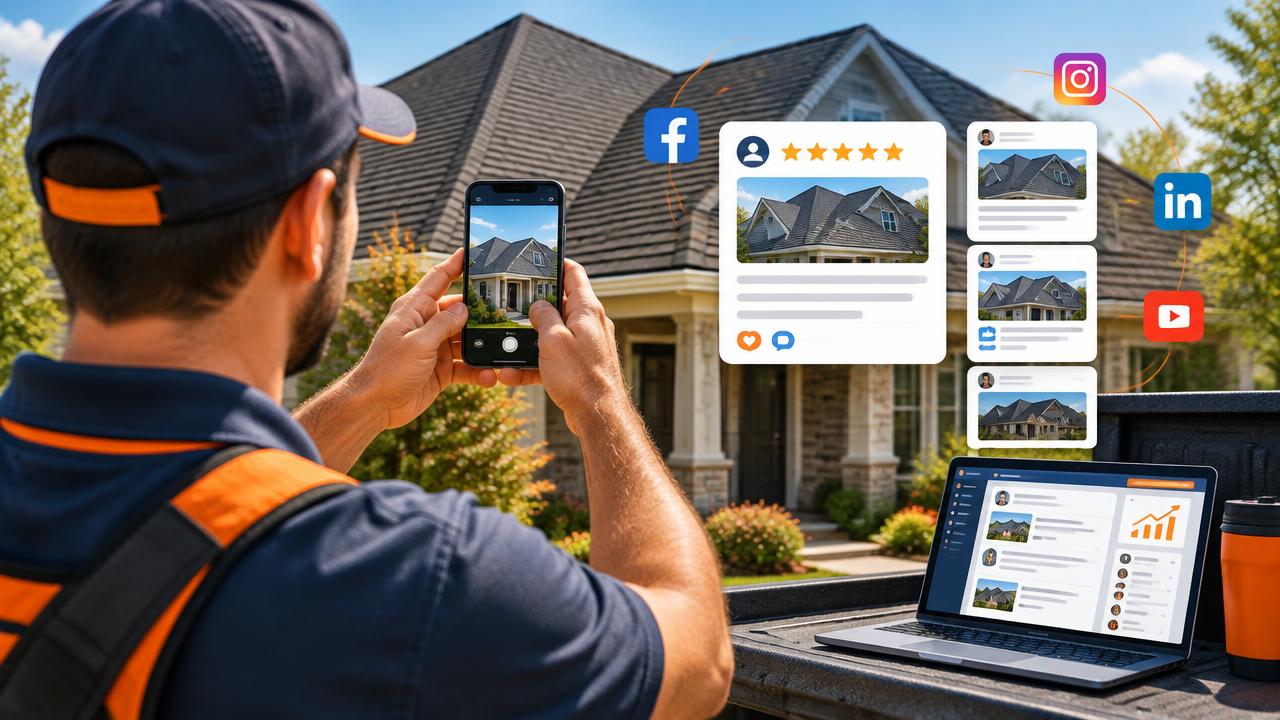
- Build the proof habit
- Photograph every job: before, mid-progress, after, and the cleanup. Sorted job photos are your entire content library — you already did the work.
- Say what you can prove
- Real addresses (with the customer's permission), real dates, real materials. Marketing claims follow the same rules as sales claims: no guaranteed savings, no invented storm damage.
- Consistency beats bursts
- Two posts a week for a year beats thirty posts in one excited weekend. Put marketing time on the calendar like a job.
Facebook: where your homeowners are
For residential roofing, Facebook remains the most practical platform — because that is where homeowners, neighborhoods and local groups already talk.
- Your business page is your storefront
- Complete profile: service area, phone, hours, license or insurance info, and a cover photo of real work. An empty page looks like a company that vanished mid-job.
- Post the work
- Before-and-after sets, crew photos, storm-response updates and finished-job walkthroughs. One good job photo with two honest sentences outperforms any stock graphic.
- Work local groups carefully
- Neighborhood and community groups reward helpfulness. Answer roofing questions genuinely and follow each group's rules; spamming group after group gets you banned and screenshotted.
- Reviews are the content
- Ask every satisfied customer for a Facebook or Google review, and reply to every review — good or bad — professionally. Unanswered negative reviews cost more than any ad buys back.
- Ads and boosts
- Small paid campaigns can amplify a real offer (inspection, maintenance check) to your service area. Set a modest budget, target your actual territory, and judge results by booked inspections, not likes.
LinkedIn: where your partners are
Homeowners are not scrolling LinkedIn — realtors, insurance agents, property managers and commercial decision-makers are.
- Fix your profile first
- A clear headline (who you help and how), a real photo, and a summary about roofs — not a list of buzzwords. Your profile is read before any message you send.
- Post for partners, not consumers
- Share the B2B side: roof reports that helped a sale close, documentation practices, commercial projects, storm-season preparation advice for managers and agents.
- Connect with intent
- Send connection requests to local realtors, agents and property managers with a short, honest note — no pitches, no automated blasts. Comment substantively on their posts before you ever ask for anything.
- Move the relationship off-platform
- LinkedIn starts conversations; coffee and a sample report build them. The module 16 playbook applies to every connection you make here.
Search: making sure the right customers find you
When a homeowner needs a roofer, they search. Local search is the highest-value marketing a roofing company owns — and most of it is free.
- Your Google Business Profile is the anchor
- Claim and complete it: correct name, address, phone and service area, real photos, categories, and services. Keep hours and contact info accurate — stale listings cost calls.
- Reviews drive ranking and trust
- Volume, recency and your replies all matter. Build a repeatable ask: at final walkthrough, hand the customer a card with a QR or short link to the review page.
- Be findable everywhere the same way
- Your name, address and phone must match across your site, profile and directories. Inconsistent listings confuse both customers and search engines.
- Pages that answer questions
- A simple site with a page per service and per service area, real photos and clear contact info outranks fancy design. Write what customers actually ask: cost factors, timelines, what an inspection covers.
- Be patient and stay clean
- Search results build over months. Never buy fake reviews, keyword-stuff city names, or copy competitors — those shortcuts can get listings removed and trust destroyed.
The rules of honest marketing
Marketing is regulated the same way sales conversations are. Keep your posts and ads as clean as your job sites.
- No manufactured urgency
- Do not invent storm damage, fake deadlines or ‘only 3 spots left' offers that are not real. Scare tactics attract the customers who will complain the loudest.
- Respect licensing and claims rules
- Advertising must follow your state's contractor advertising rules — including displaying license numbers where required. Follow truth-in-advertising standards: claims must be accurate and substantiated.
- Ask before you post
- Get written permission before posting a customer's address, drone footage of their property or a photo showing their home's interior.
- Follow platform rules
- Every platform has advertising and contest rules. A banned page erases years of reviews — read the rules before running a giveaway or engagement bait.
Practice exercise
Write out your answers: Which three jobs in the last year have before/mid/after photos ready to post? What is your review-ask script at the final walkthrough? Which five realtors, agents or property managers will you connect with this month? Which marketing hour goes on the calendar weekly? If any answer is blank, that is your next task — not another ad campaign.
Knowledge check
Score 70% or higher to pass this module.
1. The most valuable free marketing asset for a local roofing company is:
2. LinkedIn is best used by a roofer to:
3. Before posting a customer's home or drone footage of their property, you should: