Read the roof from the street
Before you ever set a ladder, the roof's shape tells you how it handles wind, where water collects and how complex the estimate will be.
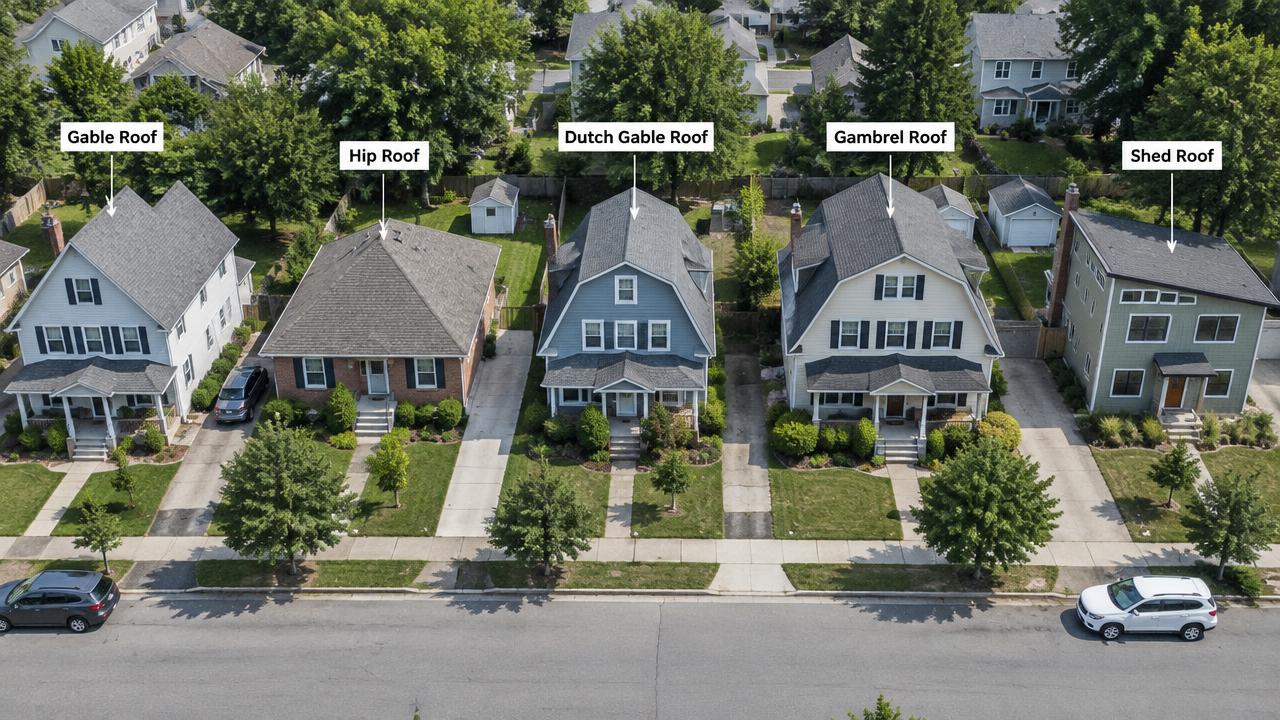
- Gable
- Two slopes forming a triangle at each end. Simple and common, but gable ends are vulnerable to wind uplift.
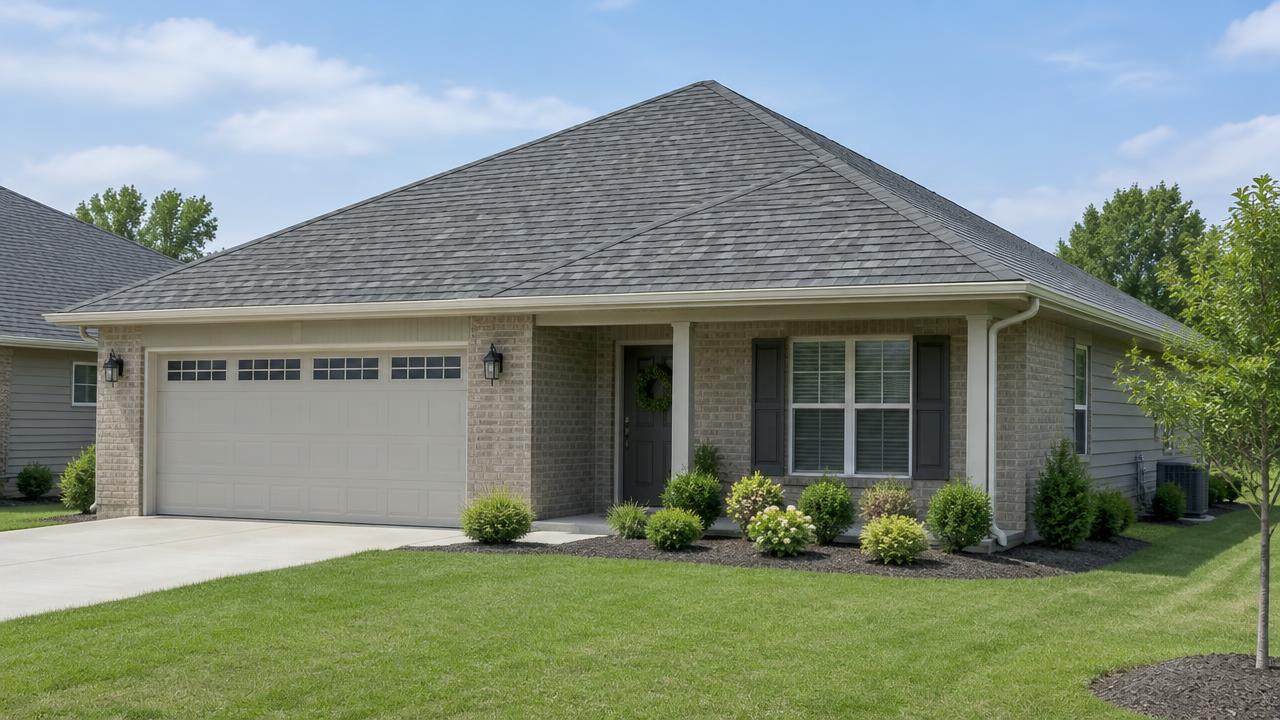
- Hip
- Slopes on all four sides meeting at a ridge. Very wind-resistant; more hip and ridge cap footage.
- Dutch gable / gablet
- A hip roof with a small gable at the top. Combines both detail sets.
- Mansard
- Four-sided double slope with a steep lower section. Common on older and multi-family buildings.
- Gambrel
- Barn-style, two slopes per side. Steep lower slope adds steep charges.
- Shed / skillion
- A single sloped plane. Often on additions and modern homes.
- Flat / low-slope
- Under 3/12. Uses membranes (TPO, EPDM, modified bitumen), not shingles.
- Cut-up / complex
- Many facets, dormers and valleys. More waste, more labor, more flashing.
Why it matters
Shape drives waste factor (simple gable ~10%, complex hip 15%+), material lists, and where to look first for wind damage. Windward slopes and edges almost always take the worst of a storm.
Knowledge check
Score 70% or higher to pass this module.
1. Which roof type has slopes on all four sides?
2. A roof under 3/12 pitch typically uses: