Asphalt shingles
The vast majority of residential roofs in storm country. Learn to tell them apart instantly.
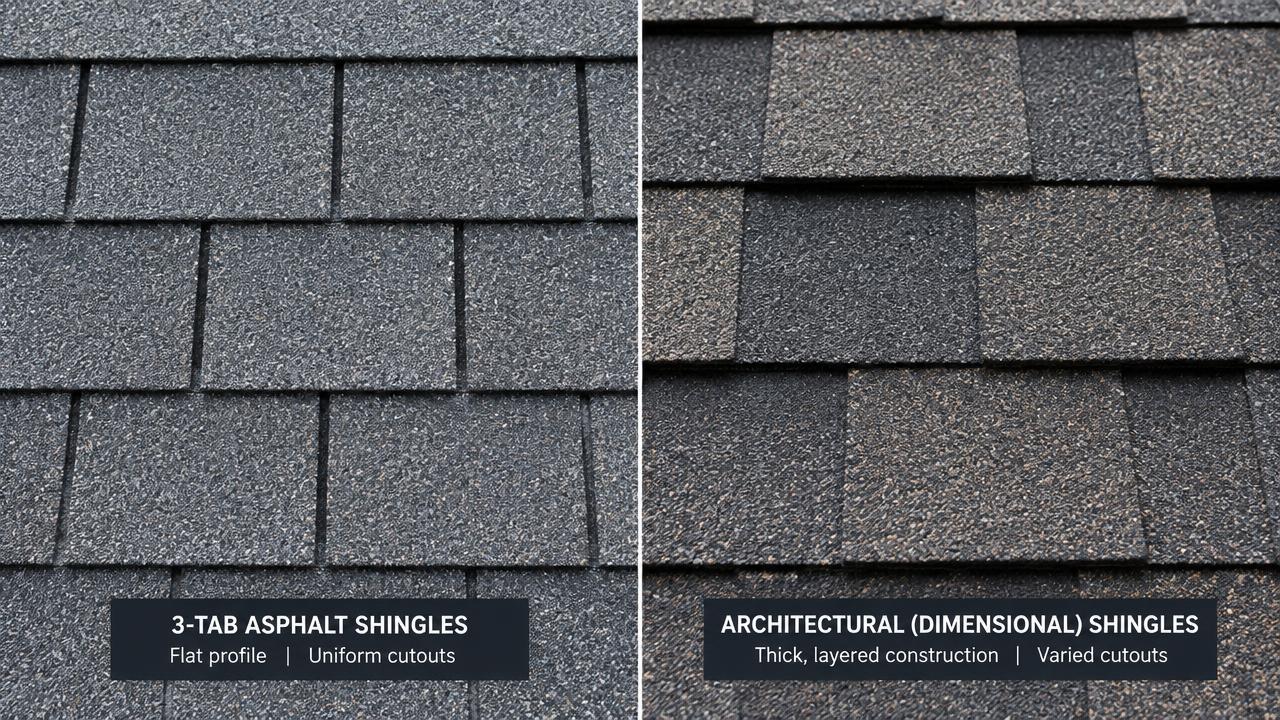
- 3-tab
- Flat, single layer with uniform cutouts creating three tabs. Typically 60–70 mph wind rating. Largely discontinued — a big deal for matching.
- Architectural / dimensional / laminated
- Two or more bonded layers, random shadow lines, no regular tabs. 110–130 mph wind ratings. Today's standard.
- Designer / luxury
- Extra-thick multi-layer shingles mimicking slate or shake. Heavier, higher cost per square.
- Impact-resistant (Class 4)
- Rated UL 2218 Class 4 — survives a 2" steel ball drop. Often SBS-modified. Can earn homeowner insurance discounts.
Other coverings
Recognize these so you never misquote a job.
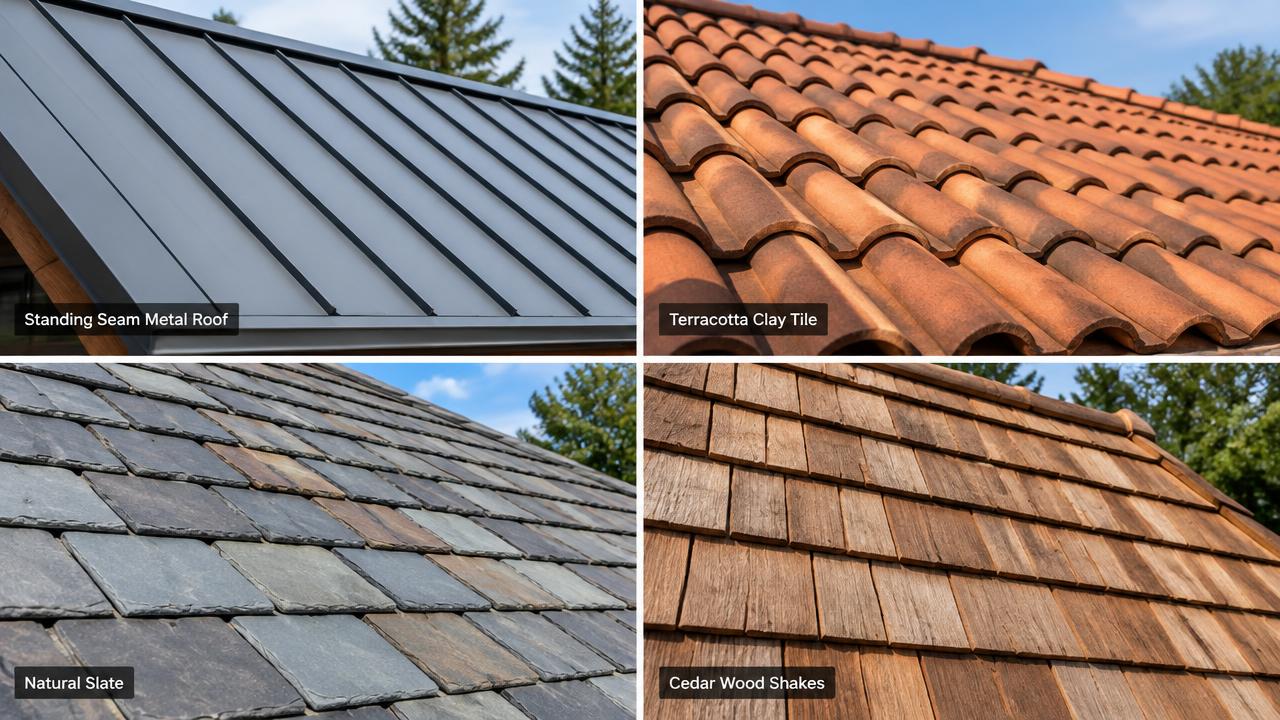
- Standing seam metal
- Raised vertical seams with concealed fasteners. Hail often dents cosmetically; check policy for cosmetic exclusions.
- Exposed-fastener metal (R-panel)
- Screws through the panel. Check for backed-out screws and worn washers.
- Stone-coated steel
- Metal panels with granule coating shaped like shake or tile.
- Clay / concrete tile
- Heavy, long-lasting, brittle under impact. Never walk on it without knowing how.
- Slate
- Natural stone, 75+ year life. Cracks and breaks from hail or foot traffic.
- Wood shake / shingle
- Shakes are split and thicker; shingles are sawn and uniform. Hail leaves splits with sharp, fresh edges.
Identifying a shingle in the field
Measure exposure (5" on 3-tab; 5-5/8" or 5-7/8" on most architectural), check the back for manufacturer markings, look at the sealant pattern and nail line, and photograph a sample next to a tape measure. Exposure size alone can prove a shingle is discontinued and unrepairable.
Knowledge check
Score 70% or higher to pass this module.
1. Which shingle has uniform cutouts and a single layer?
2. A Class 4 impact rating means the shingle passed:
3. Why does exposure size matter on a claim?